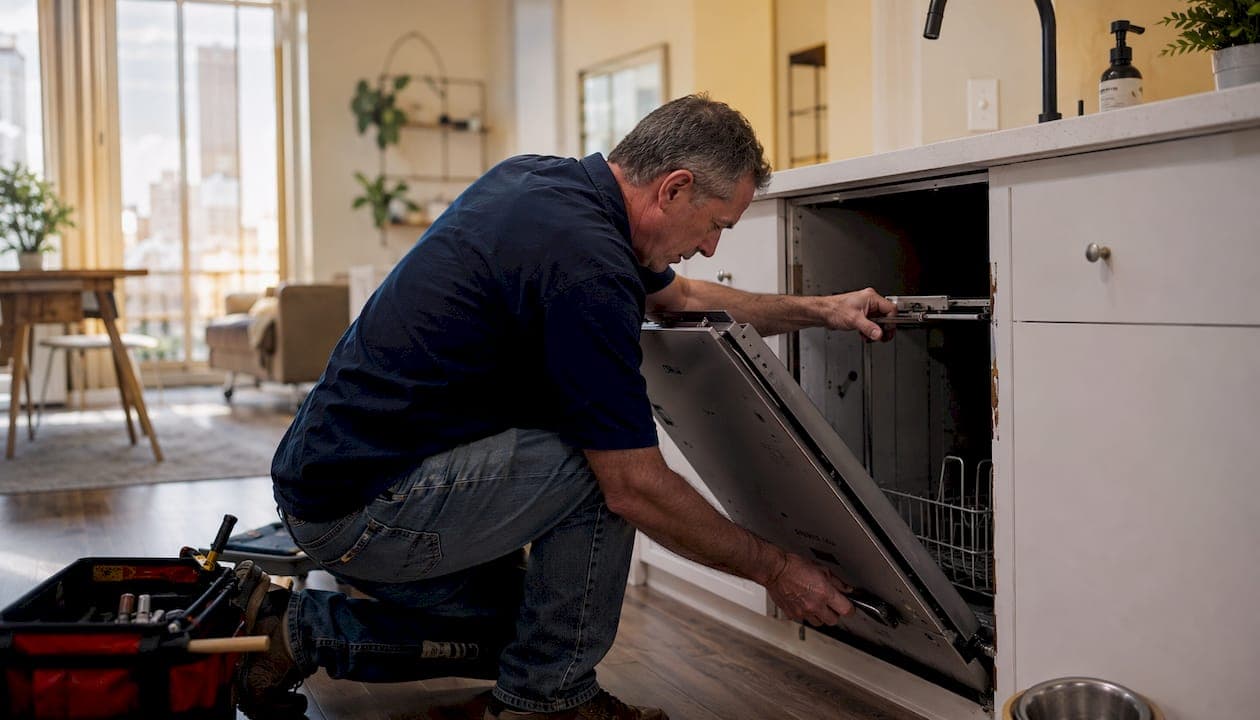
Yes, maintenance staff sometimes report pets in apartments — but only when they encounter clear, documentable evidence of a lease violation during a legitimate service visit. Their primary job is to repair and document unit conditions, not to investigate or police residents. That said, what they observe goes into the work order, and management reviews it.
TL;DR:
- Tenants: Disclose pets up front, keep vaccination records handy, and respond in writing if you receive a notice.
- Landlords: Train maintenance to document conditions objectively, not to make enforcement calls on the spot.
- Both: Assistance animals under the Fair Housing Act are a separate legal category — different rules apply.
Table of Contents
- How maintenance typically detects pets during a service visit
- What maintenance staff are expected to do — and where their authority stops
- What happens after maintenance reports a suspected pet
- How service animals and emotional support animals change the rules
- If you're a tenant: steps to avoid problems or respond to a report
- Best practices for landlords and property managers
- How to dispute a report or contest an alleged pet violation
- Key Takeaways
- Why documentation is the real issue here
- QuonSapp keeps your maintenance records where they belong
- Useful sources and further reading
How maintenance typically detects pets during a service visit
Maintenance workers are not walking through your unit looking for a reason to write you up. They are there to fix the faucet or replace a filter. But certain signs are hard to miss, and documenting property conditions is part of every technician's professional responsibility.
Common physical evidence that gets noticed:
- Pet hair on furniture, carpets, or HVAC filters
- Scratch or chew damage on doors, baseboards, or cabinetry
- Urine stains or persistent odors
- Visible food bowls, water dishes, crates, or litter boxes
- Flea or tick activity reported during a service call
- Pet toys, beds, or carriers left in plain sight
Operational triggers that increase detection risk:
- Routine repairs and appliance service
- Move-in and move-out make-ready inspections
- Emergency calls (burst pipe, smoke alarm) where entry happens without advance notice
- Neighbor complaints about noise or odors
- Drive-by observations of a pet on a balcony or patio
A technician replacing a dishwasher who notices a dog crate and chewed cabinet trim will typically photograph both as part of the unit's condition record. That photo, timestamped and attached to the work order, becomes the first piece of evidence management has. The technician did not go looking for it — the evidence was simply there.
Pro Tip: If you have an authorized pet, keep your pet addendum and vaccination records in a folder near your lease. If a maintenance tech asks, you can confirm the pet is registered and move on — no ambiguity, no escalation.
What maintenance staff are expected to do — and where their authority stops
Maintenance documentation is rarely about policing tenants. It is a risk-management duty — accurate photos and time-stamped notes protect property owners and managers from liability disputes. That framing matters because it defines what maintenance workers are and are not supposed to do.
What they are expected to do:
- Document the condition of the unit during every visit (photos, written notes, timestamps)
- Log observations into the property-management system via work orders
- Report clear evidence of damage or lease violations to management
- Follow proper entry-notice requirements — typically 24 hours in most states, with emergency exceptions
What they are not supposed to do:
- Conduct searches beyond the scope of the repair
- Make enforcement decisions or threaten residents
- Demand proof of pet registration on the spot
- Enter a unit without proper notice except in genuine emergencies
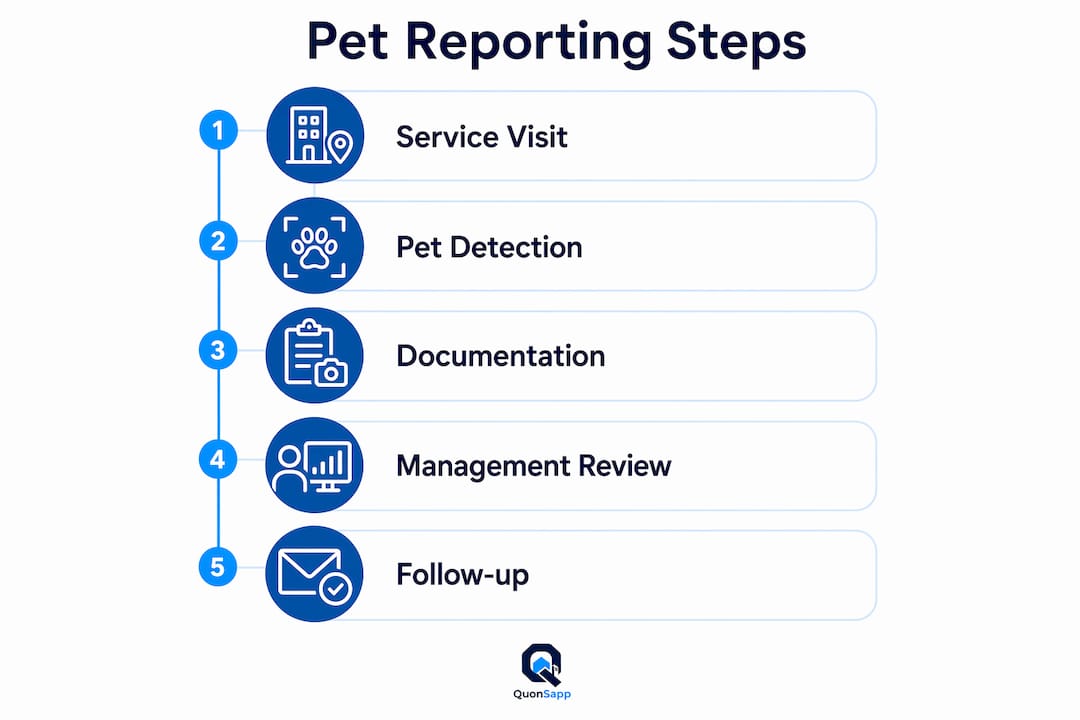
The handoff from maintenance to management usually happens within one to two business days of the service visit. A technician logs the observation in the work order; management reviews it, cross-references the lease and resident profile, and decides whether to send a notice. Lease terms vary significantly — some prohibit pets outright, others allow them with conditions, and some are silent on the issue entirely, which affects how management can respond.
What happens after maintenance reports a suspected pet
Once management receives a flagged work order, the process moves through a fairly predictable sequence. Landlords must gather evidence, send written notices, and follow the lease and applicable state law before taking stronger action.
Typical sequence after a report:
- Evidence review. Management pulls the work-order photos, timestamps, and technician notes.
- Resident notification. A written notice is sent describing the alleged violation and citing the relevant lease clause.
- Opportunity to cure. Most states require landlords to give tenants a chance to remedy the violation — usually 3–30 days depending on the state. This may mean removing the pet, registering it, or providing proof of an approved pet addendum.
- Pet fee or addendum. If the pet is allowed under the lease with conditions, management may offer a pet addendum and collect a one-time pet fee or monthly pet rent.
- Escalation. If the tenant does not comply within the cure period, management may issue a formal lease violation notice, assess fines, or begin eviction proceedings.
What this costs tenants:
- One-time pet fees or deposits (amounts vary by property and state)
- Monthly pet rent if the lease is amended to allow the pet
- Damage charges deducted from the security deposit at move-out, documented by the same photos maintenance took during service visits
- Legal fees if the matter escalates to eviction
The maintenance documentation — photos, timestamps, work-order notes — is what makes management's case defensible. Without it, a verbal report carries little weight in a dispute or small-claims proceeding.
How service animals and emotional support animals change the rules
This is where the rules shift significantly. Under the Fair Housing Act, assistance animals (which include both service animals and emotional support animals) are not pets in the legal sense. A landlord cannot apply pet fees, breed restrictions, or weight limits to a verified assistance animal.
HUD guidance makes the distinction clear: An assistance animal is not a pet. It is an animal that works, provides assistance, or performs tasks for the benefit of a person with a disability, or provides emotional support that alleviates one or more identified symptoms or effects of a person's disability. Landlords must provide reasonable accommodations for assistance animals even in no-pet buildings.
What tenants with assistance animals should do:
- Submit a written reasonable accommodation request to management (not to maintenance)
- Provide documentation of the disability-related need from a licensed healthcare provider — HUD does not require a specific form, but the connection between the disability and the animal must be clear
- Keep copies of all correspondence and any written approval
What landlords must do:
- Evaluate accommodation requests individually and in good faith
- Avoid applying standard pet policies (fees, breed bans) to verified assistance animals
- Keep the request confidential and separate from the general pet file
When maintenance observes what appears to be a pet in a unit where an accommodation is already on file, the work order should note the observation and escalate to management — not to the technician's judgment. Industry guidance recommends separating onsite staff from direct evaluation of assistance-animal requests to reduce liability and keep the process consistent. That separation protects everyone.
If you're a tenant: steps to avoid problems or respond to a report
Prevention is straightforward. Responding to a report requires a bit more care.
Prevention steps:
- Disclose your pet before or at move-in. Ask about the apartment pet policy in writing and get any approval documented in a signed pet addendum.
- Register the pet as required. Some properties use third-party services to centralize vaccination records and behavior history.
- Keep documentation current. Vet records, vaccination certificates, and photos of your pet's condition at move-in are your best protection against damage disputes at move-out.
- Get written permission for pet-sitting. Even temporary care of another person's animal can trigger lease enforcement if the lease prohibits pets — request written permission before agreeing to watch someone else's dog.
If you receive a notice after a report:
- Request copies of the maintenance notes and photos in writing.
- Respond to the notice in writing within the stated cure period — never ignore it.
- Provide your documentation: pet addendum, vaccination records, photos showing no damage.
- If the pet is an assistance animal, submit or re-submit your reasonable accommodation request immediately.
- If you believe the report is inaccurate, state that clearly in writing and request a re-inspection.
Your lease terms determine what the landlord can actually do, so read them carefully before responding. A lease that is silent on pets is very different from one with an explicit prohibition.
Pro Tip: Keep all communication with management in writing — email or the resident portal. Avoid verbal-only conversations about pet disputes. Written records protect you if the matter escalates.

Best practices for landlords and property managers
Consistent, documented enforcement protects landlords from discrimination claims and makes lease violations defensible. The goal is a process that is fair, transparent, and repeatable.
Build a written pet policy and stick to it:
- Specify which pets are allowed, any breed or weight limits, required fees, and the registration process
- Apply the policy consistently across all residents — selective enforcement creates legal exposure
- Review the policy against Fair Housing Act requirements before publishing it
Train maintenance staff on documentation standards:
- Photograph all visible damage and any pet-related evidence during every service visit
- Log observations in the work order with timestamps and unit numbers
- Escalate to management rather than confronting residents directly
- Never make enforcement decisions or promises in the field
Centralize your records. A property management audit checklist helps confirm that work orders, photos, resident communications, and lease documents are all stored in one place and accessible when a dispute arises. When maintenance notes, violation records, and resident messages live in separate systems, building a coherent timeline for a lease-enforcement action becomes much harder than it needs to be.
Use third-party pet screening. Services that centralize vaccination records and registration create an authoritative trail that supports both enforcement and accommodation decisions — and makes it harder for unauthorized pets to go undetected long-term.

Pro Tip: Keep assistance-animal accommodation decisions with management or legal counsel, not with onsite staff. A documented, consistent review process reduces the risk of a Fair Housing complaint significantly.
How to dispute a report or contest an alleged pet violation
Whether you are a tenant who believes the report is wrong or a landlord whose documentation is being challenged, the process follows the same basic logic: get everything in writing, preserve your evidence, and follow the formal timeline.
For tenants:
- Request the documentation. Send a written request for copies of the work-order notes, photos, and any other evidence management is relying on.
- Respond within the cure period. State your position clearly — whether you are disputing the facts, providing proof of authorization, or submitting an accommodation request.
- Gather your own evidence. Photos of the unit showing no damage, vet records, the signed pet addendum, and any written communications with management all belong in your file.
- Escalate if needed. If management does not respond or the dispute is not resolved, contact your local tenant-landlord board, a tenant-rights organization, or a licensed attorney. Small-claims court is an option for security-deposit disputes after move-out.
For landlords:
- Confirm the documentation is complete. Work-order photos, timestamps, written notices, and the tenant's response should all be in the resident's file before taking further action.
- Follow the cure-period timeline. Skipping or shortening the required notice period can invalidate an eviction proceeding.
- Consult legal counsel before filing. Eviction laws vary by state, and a procedural error early in the process can reset the clock entirely.
Sample language for a tenant's written request: "I am writing to request copies of all maintenance notes, photographs, and work-order records related to the alleged pet violation in Unit [X], dated [date]. Please provide these within [5–10] business days." Keep the tone factual and the request specific.
Key Takeaways
Maintenance staff report pets when they encounter clear physical evidence during a legitimate service visit — the documentation goes into the work order, and management decides what happens next.
| Point | Details |
|---|---|
| Maintenance reports conditions, not violations | Technicians document what they observe; enforcement decisions belong to management, not the field crew. |
| Disclose, document, and register | Tenants who disclose pets up front and keep records avoid most disputes before they start. |
| Assistance animals are not pets under federal law | The Fair Housing Act prohibits pet fees and breed rules for verified assistance animals — request accommodation in writing. |
| Evidence quality determines outcomes | Time-stamped photos and work-order notes are what make a lease-enforcement action or a tenant's dispute defensible. |
| QuonSapp centralizes the audit trail | Work orders, photos, violation records, and resident communications in one platform reduce disputes and speed resolution. |
Why documentation is the real issue here
The question of whether maintenance reports pets is really a question about documentation workflows. A verbal observation from a technician carries almost no weight in a dispute. A time-stamped photo attached to a work order, cross-referenced with a resident's lease and pet-fee record, is a different matter entirely.
What I find most telling is how often disputes escalate not because the facts are unclear, but because the records are scattered. Management has a photo on someone's phone, a note in an email thread, and a verbal account from the technician — none of it connected. That gap is where liability lives, for both sides. Tenants who kept their own records (vet receipts, move-in photos, written approvals) consistently fare better in disputes than those who relied on memory or goodwill.
The same logic applies to landlords. A consistent, documented enforcement process is not just good practice — it is the difference between a defensible lease-violation notice and a Fair Housing complaint waiting to happen. The properties that handle this well are the ones where maintenance documentation feeds directly into a centralized system, where every work order has a photo, and where the resident's file tells a coherent story from move-in to move-out.
QuonSapp keeps your maintenance records where they belong
Property managers who handle pet violations well share one habit: everything is in one place. QuonSapp gives your maintenance team photo-backed work orders with automatic timestamps, a violation and fine tracking workflow, and a full resident communication log — all connected to the same resident profile that holds the lease, the pet addendum, and the payment history.

When a technician logs a service visit and attaches photos, that record is immediately available to management for review. No chasing down emails, no reconstructing timelines from memory. If a dispute arises, the audit trail is already built. QuonSapp also supports HOA violation tracking and fine management for communities that need a more structured enforcement workflow.
Ready to see how it works for your portfolio? Start with QuonSapp and get your maintenance documentation working as hard as your team does.
Useful sources and further reading
- HUD — Assistance Animals (Fair Housing Act): hud.gov/helping-americans/assistance-animals — Primary federal guidance on assistance animal rights and landlord obligations.
- HUD FHEO Notice 2013-01 (Service Animals): portal.hud.gov — Official HUD notice clarifying the distinction between service animals and assistance animals under the Fair Housing Act.
- National Apartment Association — Pet Policy Guidance: naahq.org — Industry best practices for building a consistent, legally sound apartment pet policy.
- SuperLawyers — Landlord Rights and No-Pet Clauses: superlawyers.com — Practical guidance on enforcement steps and required documentation.
- TexasLawHelp — Pets and Leases: texaslawhelp.org — State-level tenant education on lease variability and pet rules.
- U.S. News Real Estate — Apartment Pet Policy Rights: realestate.usnews.com — Tenant-focused overview of rights and accommodation requests.
- Snappt — Handling Unauthorized Pet Violations: snappt.com — Operational guidance on maintenance documentation and management workflows.
- PetScreening — Centralized Pet Records: petscreening.com — Third-party pet-screening service used to centralize vaccination and registration records.
- TurnTrack — Property Management Audit Checklist: blog.turntrack.online — Practical inspection and documentation standards for property managers.
- QuonSapp Blog — Maintenance Tracking Software: blog.quonsapp.com — Overview of maintenance tracking tools and work-order documentation standards.