
What every property manager must know about renters insurance
Renters insurance for property managers is not optional risk management. It is a direct line of defense against tenant-caused damage, liability disputes, and costly coverage gaps that landlord policies simply do not cover. Most property managers require residents to maintain active renters insurance, yet compliance gaps persist without automated monitoring. That gap is where financial exposure lives.
Here is what renters insurance actually covers, and why it matters to your operation:
- Personal property coverage: Protects the tenant's belongings from fire, theft, and water damage, reducing pressure on management to compensate for losses outside your legal responsibility.
- Personal liability coverage: Pays when a resident is found liable for injury or damage to a third party, including damage to your unit caused by the tenant.
- Loss of use coverage: Covers a displaced tenant's temporary housing, which reduces disputes when units become uninhabitable after a covered event.
- Liability-to-landlord provisions: Some renters policies include a clause that pays the property owner directly for tenant-caused damage, such as a kitchen fire or overflowing bathtub.
Requiring residents to carry coverage protects your property, reduces claims against your landlord policy, and creates a documented layer of accountability from move-in day forward.
Table of Contents
- How property manager liability differs from landlord property liability
- How software automates renters insurance tracking and compliance
- Proactive risk management strategies that reduce claims and disputes
- How QuonSapp supports renters insurance compliance and property operations
- What the law actually requires around renters insurance
- How to handle claims and disputes involving renters insurance
- Cost considerations when requiring renters insurance
- Key Takeaways
How property manager liability differs from landlord property liability
These two coverage types are frequently confused, and that confusion creates real gaps. Professional liability insurance, also called errors and omissions (E&O) insurance, protects your management firm against claims of negligent management, mishandled funds, or administrative errors. It covers your business decisions, not the physical property.
Landlord property liability insurance, by contrast, insures the physical building and the owner's assets. It responds when a tenant or visitor is injured on the premises and holds the owner responsible. It does not cover damage a tenant causes to the unit.
That is exactly where renters insurance fills the gap. When a resident's negligence causes a kitchen fire or water leak, their renters policy pays the claim, protecting both the landlord's dwelling coverage and your firm's professional standing.
- E&O insurance: Covers management firm errors, omissions, and professional disputes.
- Landlord liability: Covers premises injuries and owner asset exposure.
- Renters insurance: Covers tenant-caused damage and resident personal liability.
Pro Tip: Verify that your management agreement clearly separates your firm's E&O obligations from the property owner's landlord liability policy. Overlapping assumptions between these layers are where coverage gaps quietly form.
How software automates renters insurance tracking and compliance
Manual tracking of renters insurance policy status across dozens or hundreds of units is where compliance breaks down. Policies lapse, residents forget to renew, and staff have no reliable way to catch it without a system built for continuous monitoring. Automated tracking systems monitor policy status daily, catching lapses before they become liability events.

The operational benefits of integrated insurance management software are significant:
| Automation Feature | Benefit to Property Managers |
|---|---|
| Daily policy status monitoring | Catches lapses before lease violations occur |
| Automated renewal reminders | Reduces staff follow-up time per unit |
| Compliance reporting dashboard | Provides audit-ready documentation instantly |
| Resident enrollment links | Simplifies onboarding and increases participation |
| Bundled rent payment integration | Boosts enrollment by a significant margin when premiums are paid with rent |
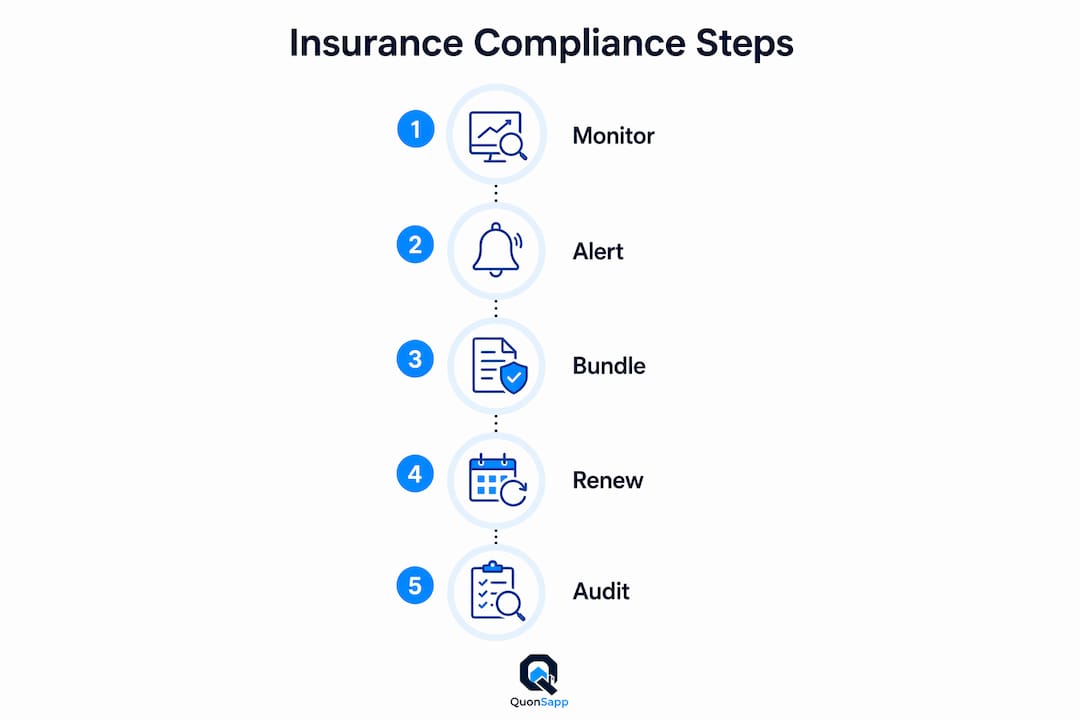
Bundling insurance premiums with rent payments is one of the most effective participation strategies available. When residents can pay their renters insurance alongside rent in a single portal, friction disappears and enrollment climbs. Platforms that integrate lease tracking software with insurance compliance monitoring give your team a single source of truth across the entire portfolio.
Pro Tip: Build insurance compliance status into your standard lease renewal checklist. A resident approaching renewal without active coverage is your clearest opportunity to re-enroll them before the new term begins.
Proactive risk management strategies that reduce claims and disputes
Reactive insurance filing costs more than proactive documentation. The managers who fare best in disputes and claims are the ones who built their paper trail before anything went wrong.
- Document every maintenance request and resolution with timestamps, photos, and staff notes. This demonstrates due diligence and counters negligence claims.
- Conduct and record routine property inspections using a standardized checklist. Inspection records are your first line of defense when a tenant alleges a pre-existing hazard.
- Communicate insurance requirements in writing at application, lease signing, and renewal. Verbal reminders do not hold up in disputes.
- Track all resident communications in a centralized platform so nothing is lost if a claim surfaces months later.
- Integrate legal advice resources where possible. Some property management platforms include pre-claim legal consultation, which helps small issues from escalating into formal disputes.
Audit-ready records do more than satisfy insurers. They demonstrate to courts, arbitrators, and property owners that your team managed the property responsibly. Ancillary income strategies that include required renters insurance also contribute to net operating income while reducing claims frequency across the portfolio.
How QuonSapp supports renters insurance compliance and property operations
QuonSapp is built for the property managers and HOA teams who need every operational function in one place, including the documentation and tracking infrastructure that makes insurance compliance manageable at scale.
Here is how QuonSapp's tools directly support your renters insurance and risk management workflow:
- Lease Tracking: Monitors lease start and end dates with renewal alerts, giving you a natural checkpoint to verify active insurance coverage before each new term.
- Resident Profiles: Stores contact details, lease dates, and fee structures per resident, creating a complete record that supports insurance verification and dispute defense.
- Document Library: Upload and organize insurance certificates, lease addenda, and compliance notices by property, with resident access to their own documents.
- Audit Log: Every action is logged with a timestamp and user ID, producing an automatic paper trail that holds up in claims reviews and legal proceedings.
- Inspection Tracking: Schedule and document property inspections with notes and photo evidence, directly supporting your risk management documentation.
- Maintenance and Work Orders: Photo documentation on every work order creates before-and-after records that counter tenant damage claims.
- Announcements and Messaging: Send targeted insurance requirement reminders to all residents or specific units, with delivery tracked in the platform.
- Online Resident Portal: Residents manage their own documents and payments from a single portal, reducing friction around insurance enrollment and renewal.
QuonSapp gives property managers the operational infrastructure to enforce insurance requirements consistently, document compliance thoroughly, and respond to claims with confidence. When your lease tracking, resident communications, and inspection records all live in one platform, nothing falls through the cracks.
Pro Tip: Use QuonSapp's Document Generator to create a standardized insurance requirement notice. Send it at application, lease signing, and 60 days before renewal. Three touchpoints, zero ambiguity.
Explore QuonSapp to see how the platform supports renters insurance compliance alongside your full property management operation.

What the law actually requires around renters insurance
No federal law in the United States requires tenants to carry renters insurance. State law varies, but most states permit landlords and property managers to require renters insurance as a condition of tenancy, provided the requirement is written into the lease agreement. A handful of states have specific disclosure requirements or limits on how insurance requirements can be structured, so reviewing your state's landlord-tenant statutes is worth doing before drafting lease language.
What the law does require in most jurisdictions is consistency. You cannot selectively enforce an insurance requirement against some residents and not others without creating fair housing exposure. The requirement must appear in every lease, apply to every resident equally, and be enforced through a documented process. Courts have generally upheld renters insurance requirements when they are clearly stated, uniformly applied, and not used as a pretext for discriminatory enforcement.
Local ordinances occasionally add another layer. Some municipalities require specific minimum coverage amounts or mandate that landlords provide written notice of the insurance requirement before lease signing. Consulting a local real estate attorney before finalizing your lease addendum is the most reliable way to confirm compliance in your specific market.
How to handle claims and disputes involving renters insurance
When a claim arises, your documentation determines the outcome as much as the policy language does. The moment a loss event occurs, your job is to create a clear, timestamped record of what happened, what condition the property was in before the event, and what steps your team took in response.
Notify the relevant insurer promptly. If the damage is tenant-caused, the resident's renters policy is the primary payer. If the tenant's policy lapses or is insufficient, the claim may roll to the landlord's dwelling coverage, which is exactly the scenario renters insurance requirements are designed to prevent. Keep copies of the tenant's current insurance certificate in your document system so you can file a third-party claim without delay.
Disputes between residents and property managers over damage responsibility are most effectively resolved when you have inspection records, work order photos, and written communications already in the file. A resident who claims damage was pre-existing has a much harder argument when your move-in walkthrough photos and inspection logs tell a different story.
Cost considerations when requiring renters insurance
Renters insurance is among the most affordable forms of personal coverage available. Standard policies typically run $15–$30 per month for most residential units, covering $30,000 or more in personal property and $100,000 or more in personal liability. That cost is borne by the resident, not the property manager or owner.
For property managers, the real cost question is operational: how much staff time does manual compliance tracking consume, and what does a single uninsured tenant claim cost when it hits your landlord policy? The property management trends moving into 2026 point clearly toward integrated compliance platforms as the cost-effective answer. Platforms that automate enrollment, monitoring, and reporting convert a recurring staff burden into a background process.
Some management firms also explore master liability programs, where the property carries a blanket tenant liability policy and passes the cost to residents as a monthly fee. This approach guarantees coverage regardless of individual tenant compliance, though it requires careful legal review to confirm it satisfies your lease requirements and state regulations. Either way, the cost of requiring coverage is far lower than the cost of absorbing an uninsured claim.
Key Takeaways
Requiring and actively monitoring renters insurance is a highly cost-effective risk management tool for many U.S. property managers, and automation is what makes compliance sustainable at scale.
| Point | Details |
|---|---|
| Compliance gaps are real | Industry data shows coverage lapses are common without automated daily monitoring. |
| Three distinct coverage layers | E&O, landlord liability, and renters insurance each cover different risks and must not be conflated. |
| Bundling drives enrollment | Bundling insurance premiums with rent payments boosts resident enrollment significantly. |
| Documentation is your defense | Timestamped inspection records, work orders, and communications are your strongest claims defense. |
| Automation reduces operational cost | Integrated platforms convert manual compliance tracking into a background process, freeing staff time. |