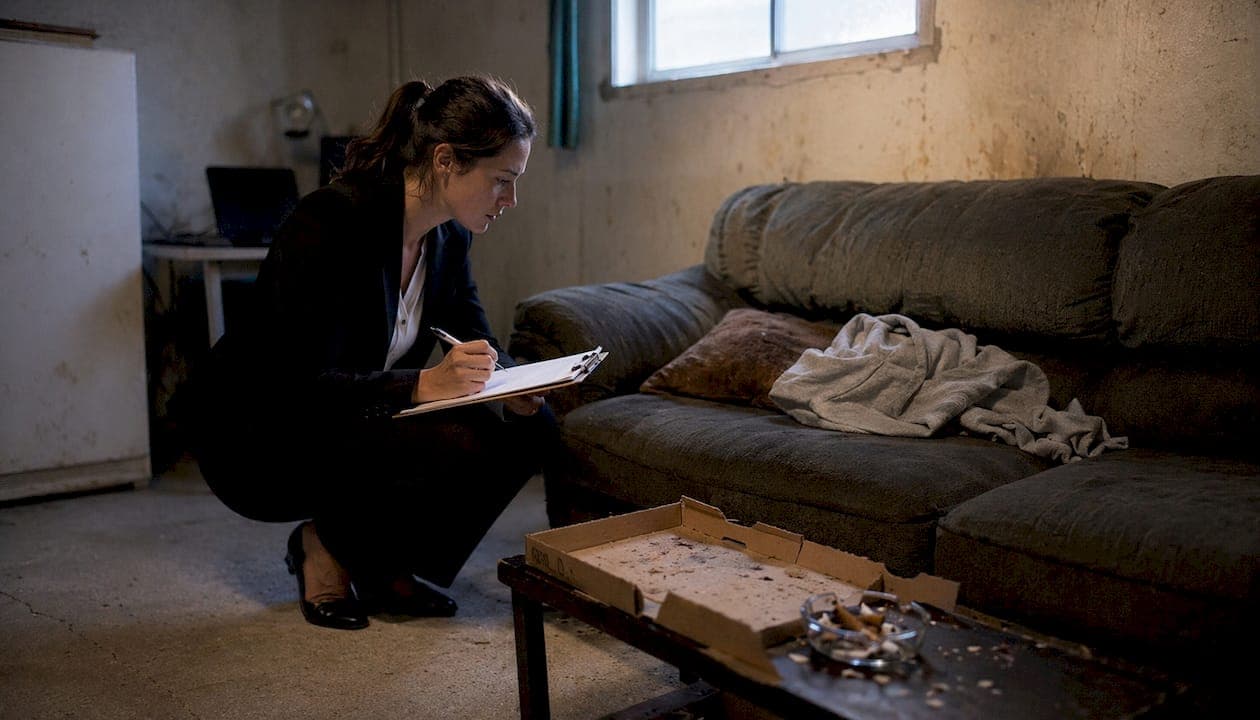
What methods actually prove a tenant is smoking marijuana in an apartment?
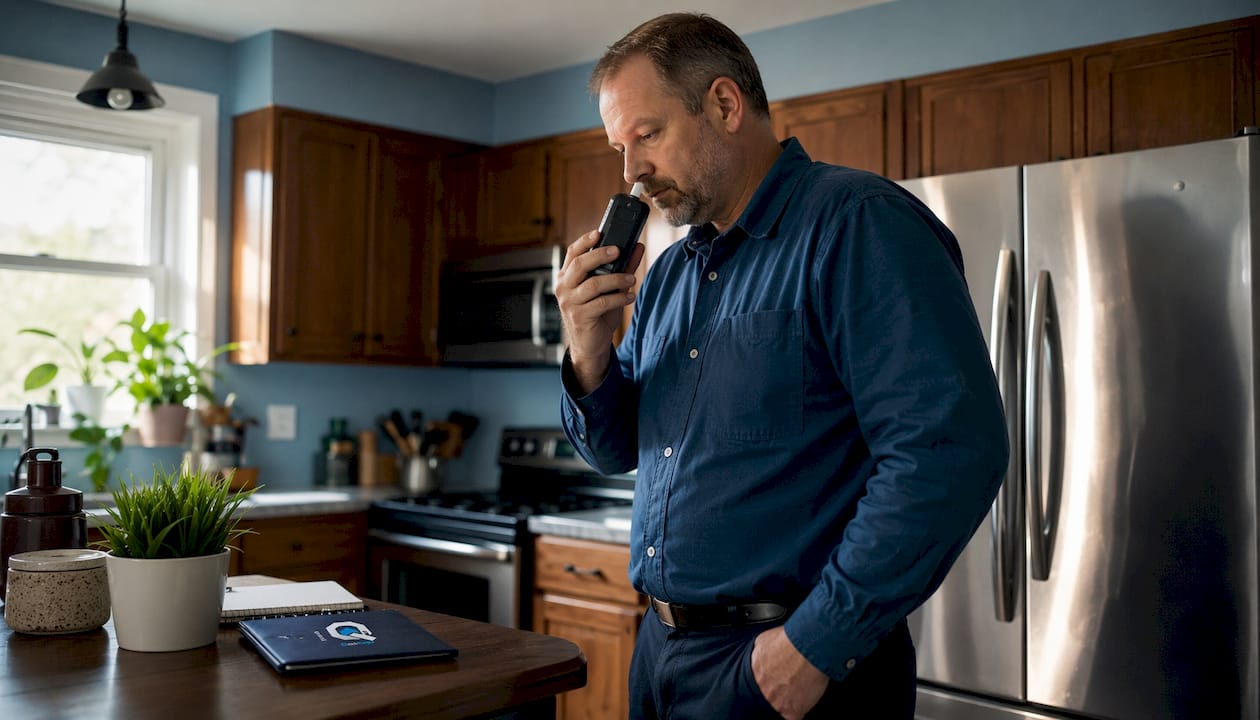
Proving a tenant is smoking weed in an apartment comes down to one thing: objective, documented evidence. Subjective odor complaints alone rarely hold up in court. The strongest cases combine physical inspection findings, written neighbor statements, and timestamped sensor data into a record that speaks for itself.
Here is what landlords rely on to establish a lease violation:
- Distinct marijuana odor concentrated at the tenant's door or inside the unit, documented during a manager walkthrough
- Smoke stains and discoloration on walls, ceilings, and HVAC filters compared against clean move-in photos
- Paraphernalia and ash residue found on windowsills, balconies, or inside the unit during an inspection
- Written neighbor complaints from adjacent units above, below, and on both sides, each with specific dates and observations
- Manager walkthrough logs with timestamped photos taken during properly noticed inspections
- IoT air quality sensor data showing chemical spikes linked to complaint times, exported as timestamped logs
- Surface nicotine swab test results compared against a clean baseline established at move-in
Each item alone carries some weight. Together, they build a preponderance of evidence standard that courts recognize in lease enforcement disputes.
How to detect signs of marijuana smoking inside an apartment
Physical detection is where every investigation starts. A manager walkthrough, conducted with proper written notice, gives you direct access to the most telling evidence of tenant smoking.
- Smell at the door and inside the unit. Marijuana odor embeds in drywall, carpet, and upholstery. A strong air freshener smell alongside a faint smoke odor is itself worth documenting. If the smell is strongest at the suspected tenant's door and absent from neighboring units, that concentration is meaningful.
- Yellow or brown staining. Nicotine and tar deposit on ceilings, walls near windows, light fixtures, and HVAC vents. Compare paint color near the ceiling to areas behind furniture for contrast.
- Burn marks. On carpet edges, countertops, and window sills. These are the hardest physical signs to dispute because they cannot be attributed to a neighboring unit.
- Ash residue. On windowsills, bathroom fixtures, or tucked into gaps in flooring or baseboards.
- HVAC filter discoloration. Replace the filter and photograph both the old and new one side by side. Smoke-saturated filters are compelling visual proof that cannot be argued away as coming from a neighbor.
- Paraphernalia. Burnt residue, rolling papers, or pipes visible during an inspection or on a private balcony the tenant controls exclusively.
The "boxing" technique is one of the most effective approaches for detecting marijuana odor in multi-unit buildings. Walk the hallway and note where the smell is strongest. If neighbors above, below, and on both sides report odor and it peaks at one unit's door, that pattern creates strong circumstantial evidence pointing directly at the source.
Pro Tip: Conduct the walkthrough at the same time of day as prior complaints. Odor concentration varies with ventilation and time, so matching your inspection window to when neighbors reported the problem gives you the most relevant documentation.
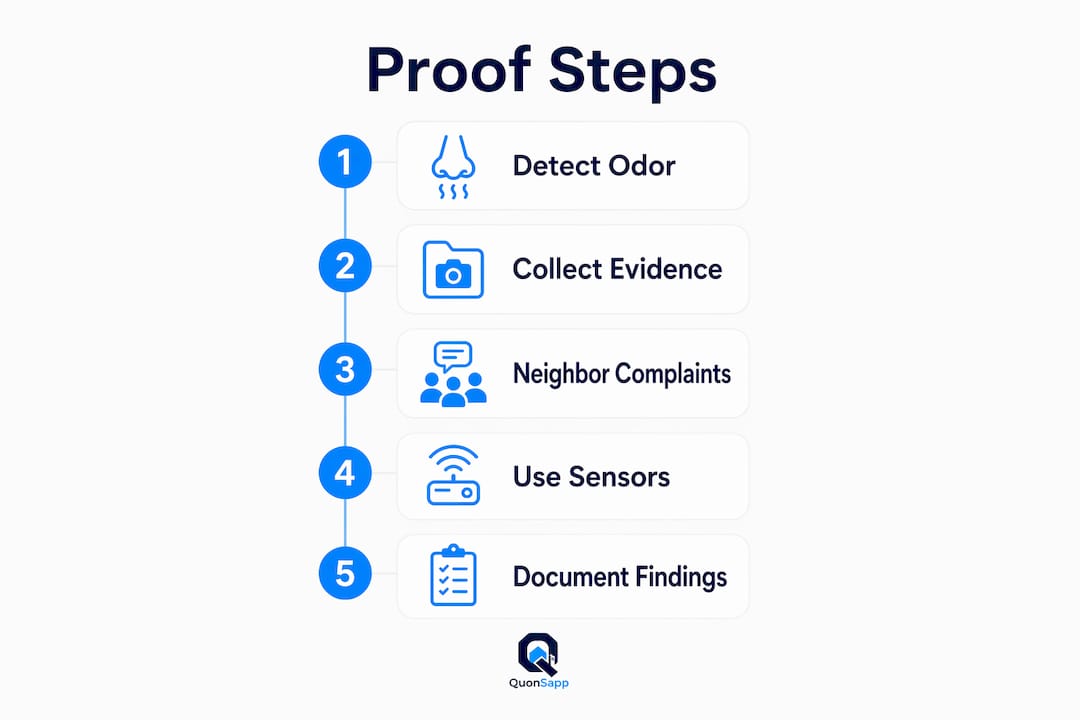
How to build a legally defensible record of tenant smoking evidence
Documentation is what separates a winnable case from a dismissed complaint. Every piece of evidence you gather needs a date, a description, and ideally a photo or written record attached to it.
- Neighbor complaint logs. Ask complaining tenants to submit their observations in writing, an email works fine, and include the date, time, and specific detail such as "smoke smell entering through the shared wall on the east side of my bedroom." Written neighbor complaints carry particular weight because they establish third-party corroboration independent of the landlord's account.
- Timestamped inspection photos. Photograph every finding during your walkthrough. Ceiling color, wall staining, HVAC filter condition, and any visible residue or paraphernalia should all be captured with your device's timestamp active.
- Surface nicotine swab tests. These tests detect nicotine residue on walls, countertops, and fixtures even after cleaning. A positive result on a surface documented as clean at move-in is strong chemical evidence that smoking occurred during the current tenancy.
- Baseline move-in records. Your move-in inspection report is the foundation. White ceilings, clean filters, and no odor at move-in compared against yellowed ceilings and smoke-saturated filters mid-tenancy tells a story that is difficult to refute.
- Third-party contractor notes. When an HVAC technician or maintenance worker enters the unit and documents smoke residue in their work order, that third-party record carries more credibility than a landlord's account alone.
Pro Tip: Cross-reference your sensor alert timestamps with the dates and times on neighbor complaint logs. When a chemical spike in the sensor data aligns with a written neighbor complaint from the same evening, the two pieces of evidence reinforce each other in a way that is hard to challenge.
What landlords need to know about marijuana smoking laws and tenant rights
The legal landscape around marijuana in rentals is more complicated than it was five years ago. Recreational marijuana is now legal in many states, but that does not prevent landlords from enforcing a no-smoking lease clause. The key distinction is between legal use and where that use occurs.
- No-smoking lease clauses. A well-drafted clause should cover cigarettes, cigars, pipes, marijuana, and vaping. It should state that violations constitute a material breach and specify the notice and cure period before escalation.
- Eviction notice timelines. These vary by state. In Nevada, for example, eviction for nuisance typically involves a 3-day nuisance notice followed by a 5-day notice to quit, with courts processing the case over 2–4 weeks. Your state's timeline may differ significantly, so confirm local requirements before sending any notice.
- Inspection and privacy rules. Most states require written notice before a non-emergency inspection, typically 24–48 hours. Entering without notice, even to gather evidence, can invalidate your findings and expose you to liability.
- Surveillance limitations. Audio recording inside a tenant's unit without consent is illegal in most jurisdictions. Cameras in common hallways are generally permitted; cameras inside private units are not. IoT air quality sensors installed in common areas or with tenant notification are typically compliant, but privacy laws require tenant notification before deployment.
- Medical versus recreational marijuana. A tenant with a medical marijuana card still has no right to smoke inside a unit covered by a no-smoking clause. However, some states require landlords to consider reasonable accommodations for disability-related use. Consult an attorney before issuing a violation notice to a tenant who has disclosed a medical marijuana authorization.
- Objective evidence over subjective claims. Courts often reject eviction claims based solely on odor because smell is inherently subjective and can originate from external sources. The strongest proof combines consistent odor at the tenant's door with physical staining, neighbor statements, and chemical test results.
Understanding why property managers send violation letters and how those letters fit into the broader enforcement process helps you build a case file that holds up if the matter escalates.
What to do after you have documented proof of a smoking violation
Once you have gathered solid evidence, the response needs to be measured, documented, and legally compliant. Moving too fast or skipping steps can undermine an otherwise strong case.
- Send a formal written violation notice. Reference the specific lease clause, describe the evidence you gathered (dates, photos, test results), and state clearly what the tenant must do to cure the violation. For lease violation notice examples that hold up legally, make sure the language matches your state's requirements.
- Allow the cure period. Most jurisdictions give tenants a window to correct a curable violation before eviction proceedings can begin. Skipping this step typically voids the notice.
- Document all communications. Every email, letter, and conversation related to the violation should be logged with a date. If the tenant denies the violation verbally, follow up in writing to create a paper trail.
- Involve legal counsel before filing for eviction. An attorney familiar with your state's landlord-tenant law can confirm your notice meets local requirements and advise on whether the evidence package is sufficient for court.
- Consider law enforcement only when necessary. If you suspect illegal activity beyond a lease violation, such as distribution, contacting local law enforcement may be appropriate. For a straightforward smoking violation, the eviction process is the correct channel.
- Continue documenting after the notice. Follow-up inspections, with proper notice, show whether the tenant has cured the violation or continued the behavior. Ongoing documentation strengthens your position if the case proceeds to court.
Advanced tools that help you detect and document marijuana smoking
Technology has changed what landlords can prove and how quickly. IoT air quality sensors, in particular, have shifted the evidentiary standard in lease enforcement cases.
- HALO Smart Sensor. The HALO detects nicotine, THC, and propylene glycol (the primary chemical in vaping aerosol) using internal air sampling. It is 100 times more sensitive than standard smoke detectors and generates timestamped event logs that serve as documented proof. Alerts alone do not constitute legal evidence; you need the exported log data showing chemical spikes with timestamps.
- Calibration and data export. Sensors must be properly calibrated and their logs exported in a format you can present in a proceeding. Raw alert notifications on a phone app are not sufficient. Confirm that your device produces exportable, dated records before relying on it for enforcement.
- Privacy compliance. Deploy sensors in common areas or with written tenant notification. Sensors placed inside a unit without disclosure can create legal exposure that outweighs the evidence they produce.
- Surface nicotine swab tests. Kits are available through property management suppliers and detect nicotine residue on walls, countertops, and fixtures. Pair a positive result with a clean move-in baseline to create a defensible before-and-after comparison.
- Professional air quality assessments. For high-stakes disputes, a professional assessment by a certified indoor air quality specialist produces a formal report that carries expert authority in court proceedings.
- Combining methods. Sensor data alone, like odor alone, is stronger when paired with physical inspection findings and neighbor statements. The combination of chemical evidence, visual documentation, and third-party corroboration is what courts find most persuasive.
Keeping all of this organized across multiple units is where property management tools earn their value. QuonSapp's Inspection Tracking feature lets you schedule inspections, attach timestamped photos, and log notes directly to a resident's profile, so your evidence stays connected to the right unit and tenant record from day one.


Managing lease violations, inspection logs, and tenant communications across a portfolio is exactly what QuonSapp was built for. Explore QuonSapp to see how the platform keeps your documentation organized and your enforcement process on solid legal ground.
Key Takeaways
Proving tenant marijuana smoking requires a combination of physical evidence, written neighbor statements, and objective chemical data, not subjective odor claims alone.
| Point | Details |
|---|---|
| Objective evidence wins cases | Combine physical stains, HVAC filter discoloration, and sensor logs rather than relying on odor alone. |
| "Boxing" the smell works | Neighbor complaints from units above, below, and on both sides pointing to one door create strong circumstantial proof. |
| Move-in baselines are critical | Clean move-in photos and surface swab results make later evidence of smoking during tenancy essentially self-proving. |
| Legal notice requirements vary | Nevada uses a 3-day nuisance notice plus a 5-day quit notice; confirm your state's timeline before filing. |
| Sensor logs need proper export | HALO and similar IoT sensors must produce timestamped, exportable chemical logs to serve as admissible evidence. |